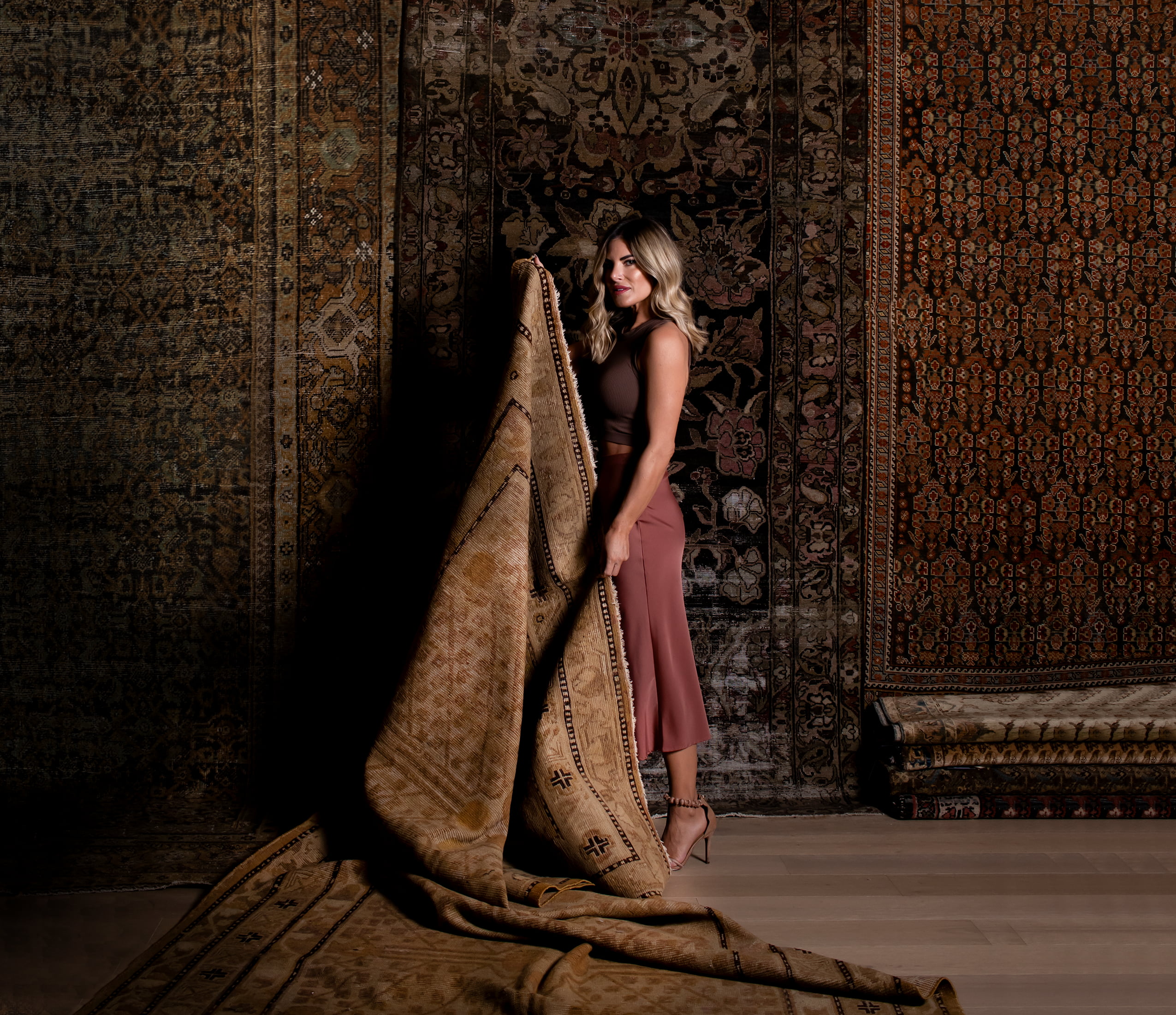
Standing in front of a vintage rug, Nicki Wolf notices first whether it makes her feel something. Only then does the closer reading start. She studies the balance of the design, the quality of the wool, the color, the way the piece has aged. Wear does not scare her. Some of her favorite rugs carry visible signs of age, and she values them for exactly that, the warmth and authenticity the years leave behind. What she is looking for is personality.
She can point to the checklist, and she knows it only goes so far. “You can’t always explain why one works and another doesn’t, but after enough years, your eye simply knows.”
That eye built Heir Looms, and no single rug started it. “There wasn’t a single defining rug. It happened slowly,” Wolf says. She had always loved interiors and the feeling a home can evoke, and she found herself searching for rugs because they seemed to be the piece that gave a room its soul. “Furniture can be beautiful, but a great rug grounds a space in a way nothing else can.” Friends and designers began asking her to help them find one-of-a-kind pieces of their own, and the search became the West Palm Beach company she runs today. She never sat down with a business plan. “It grew naturally because I loved the process, and I loved seeing how one exceptional rug could completely transform a room.”
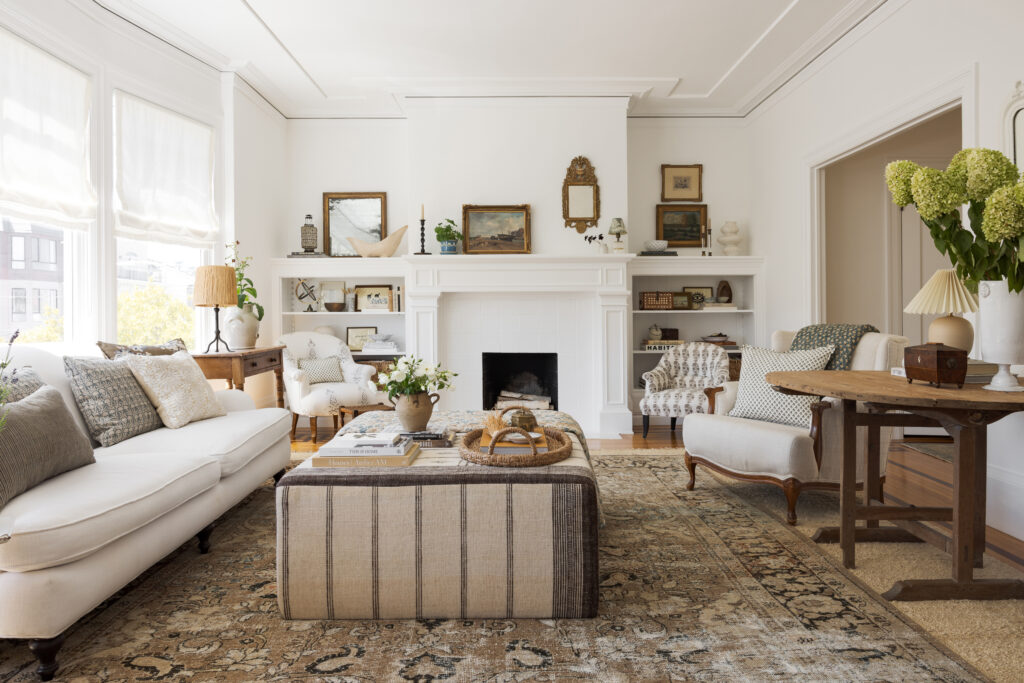
The Belief That Named the Business
Underneath the company sits a conviction that predates it. The most beautiful homes, Wolf believes, are layered over time rather than purchased all at once. The pieces people cherish most are rarely the newest ones in the house. “They’re the ones with history, craftsmanship, and a story behind them. A handwoven rug carries all of that.” Her case for the form is generational. “It has already lived a life before it reaches your home, and if it’s well made, it will likely outlive all of us.”
The name comes directly from that. Heir Looms reflects a belief in owning less and keeping it longer, and she makes the argument plainly. “I hope we encourage people to buy fewer things, but buy better things, pieces they’ll still love twenty or fifty years from now.”
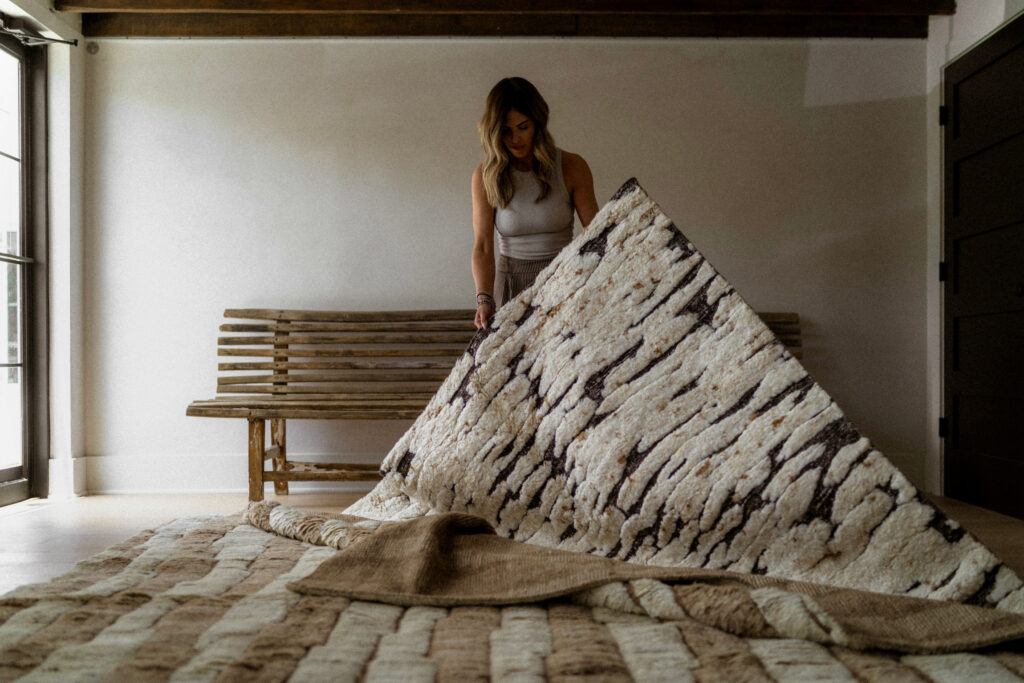
She is drawn less to a region now than to a feeling. The rugs she loves rarely ask for attention on first sight. They grow more interesting the longer you live with them. “Soft palettes, beautiful texture, subtle movement, and exceptional wool will always outlast trends,” she says. She sees the same shift in the rooms themselves. “I think people are moving away from rooms that feel overly styled. They’re looking for homes that feel lived in, relaxed, and personal, and rugs with quiet character fit beautifully into that shift.”
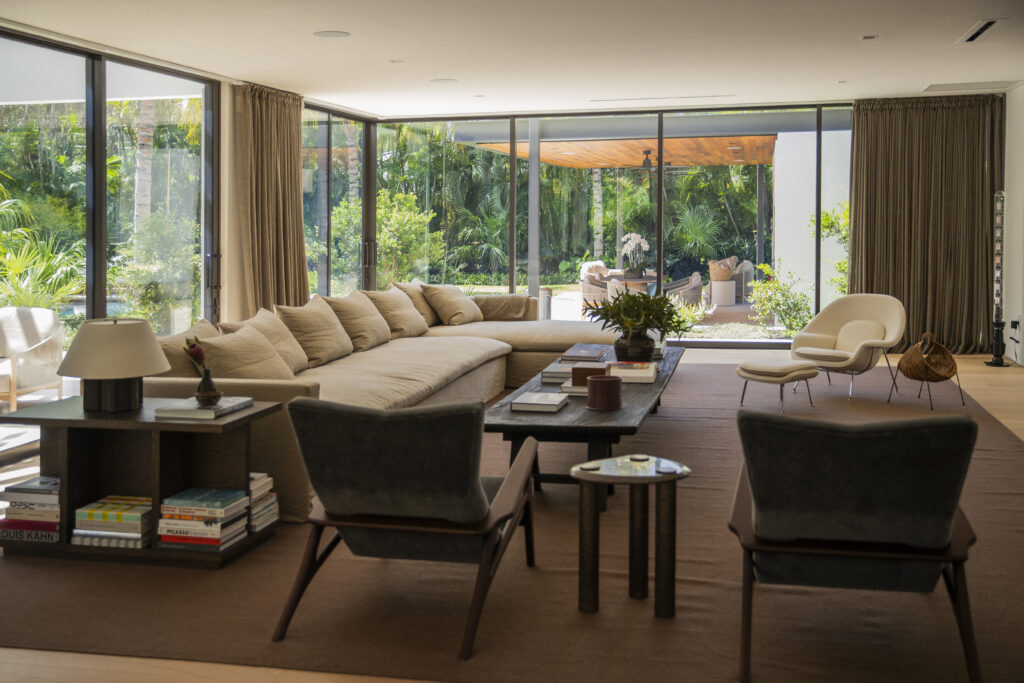
The Line Vintage Has to Earn
Wolf draws her line on the word vintage plainly. “To me, vintage isn’t a look, it’s authenticity.” A rug is not vintage because it is faded or distressed. It is vintage because it was genuinely made decades ago, with materials and techniques that grow harder to find every year. Heir Looms is, in her own words, incredibly selective about what enters the collection, because she wants clients to trust that every piece has earned its place. “I’d rather offer fewer rugs than fill the showroom with pieces that don’t feel special.”
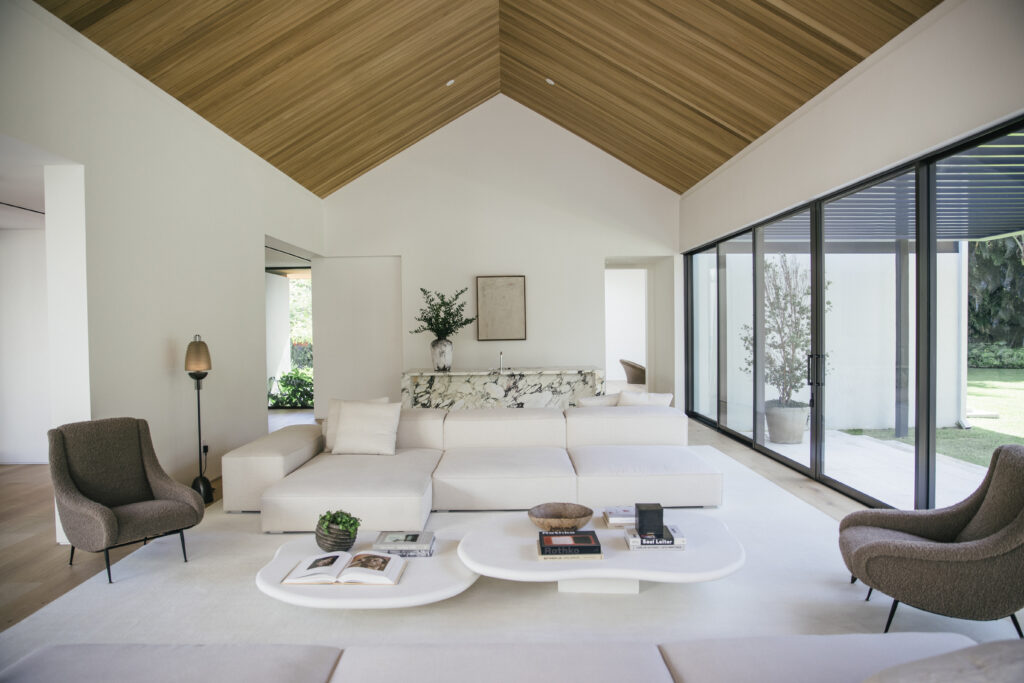
“Vintage will always be the heart of our business,” Wolf says. Designers remain central to the work too, and they arrive with needs vintage cannot always meet. An unusual size. A particular color palette. Something that simply does not exist in the vintage market. Modern Heir and Heir Studio let her answer those requests without drifting from what makes Heir Looms itself. “We approach new production with the same respect for craftsmanship, natural materials, and timeless design that drew us to vintage rugs in the first place,” she says. “The goal isn’t to recreate antiques. It’s to create future heirlooms.”
The Rug Is Not the Last Thing You Buy
Ask her for guidance and she will not hand over a formula. People spend too much time worrying about rules, she believes. Guidelines have their uses, but great interiors come from balance, proportion, and how a room makes you feel, not from following a formula. Where she is direct is on sequence. “The biggest mistake I see is treating the rug like the last thing you buy,” she says. “In reality, it’s often the piece that sets the tone for everything else. When you choose the right rug early, the entire room comes together much more naturally.”
Heir Looms, at its core, has never been only about rugs. “It’s about helping people create homes with warmth, depth, and longevity.” She wants every rug the business sells to be worth living with for decades, not because it is fashionable, but because it is genuinely beautiful. No checklist settles that part. A rug either makes her feel something or it doesn’t, and everything else she looks for comes after that.