The art came first. The owners of this Palm Beach Gardens house already owned a few pieces of art, and Festa Radoni, founder of Radoni Interiors, wanted the design to work around them. The family’s long relationship with art also told her how far she could take everything else.
“The family loves art and grew up around it, so I knew I could push them a little with color and pattern, even though everyone seems to want neutrals these days,” she says. Most of the larger furniture in the house stays neutral. That gave her room for bigger swings “without overdoing it,” as she puts it. The real question was how many bold moments a single room could hold before they started arguing.
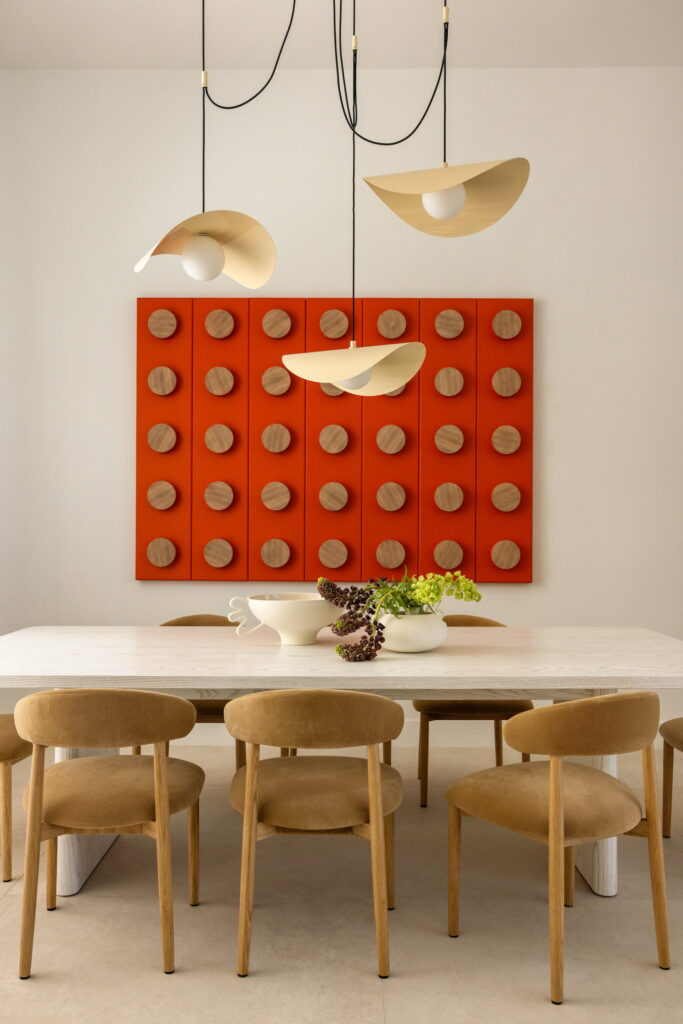
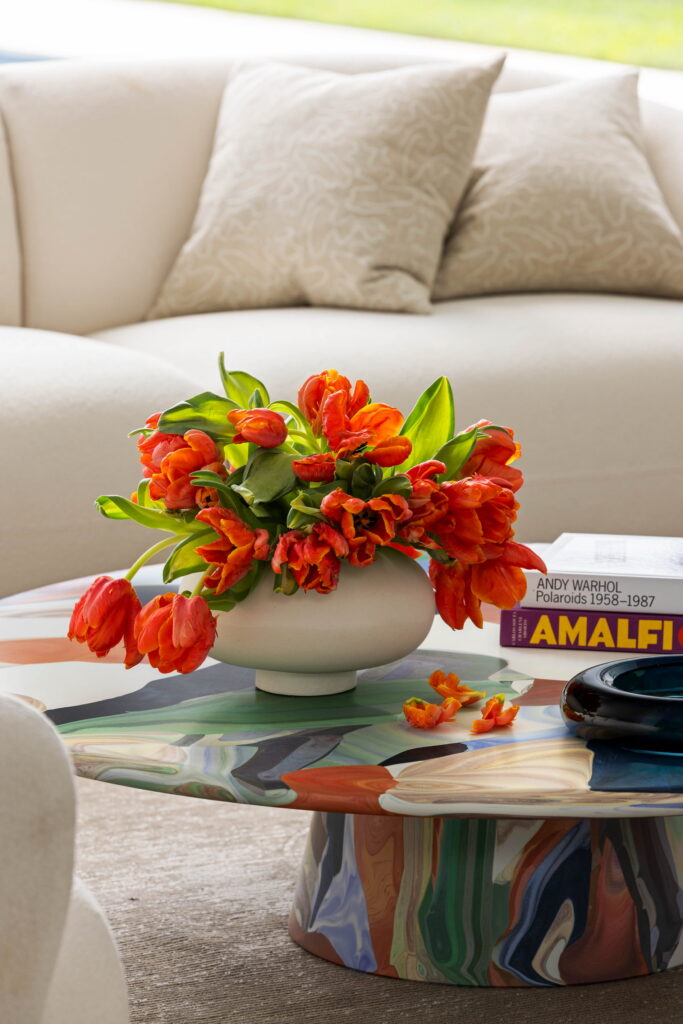
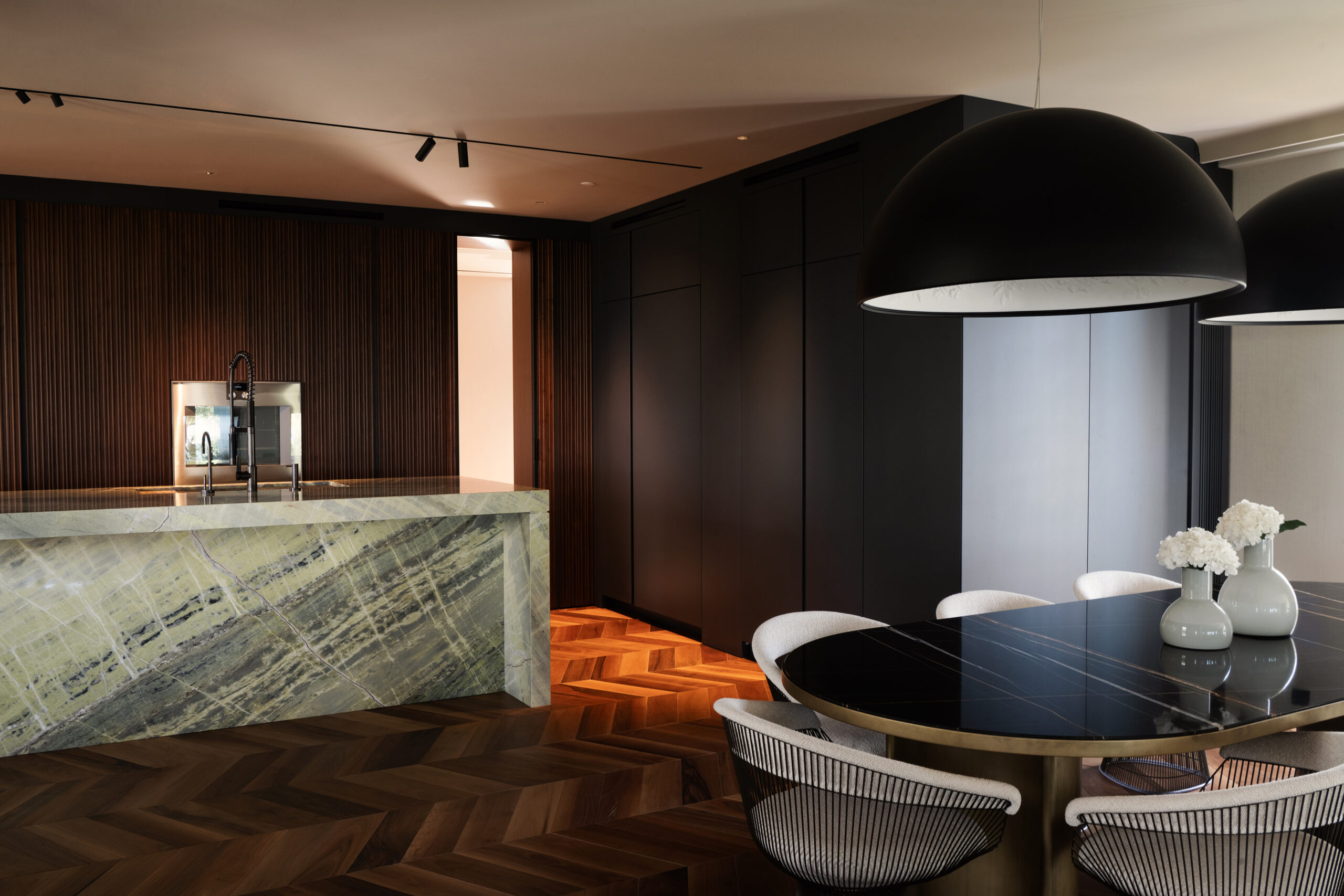
Radoni points to four choices that set the tone of the house, and only one of them is furniture. The Kooij coffee table and the orange Bradley Duncan work sit alongside the lighting throughout and the Belvedere marble in the kitchen. It is a telling list, weighted toward light, stone, and art over anything a person sits on. “Each one brought its own personality, color, and energy to the space. Together, they created that sense of happiness we were after without ever feeling forced,” Radoni says.
Two Clients and One Kitchen
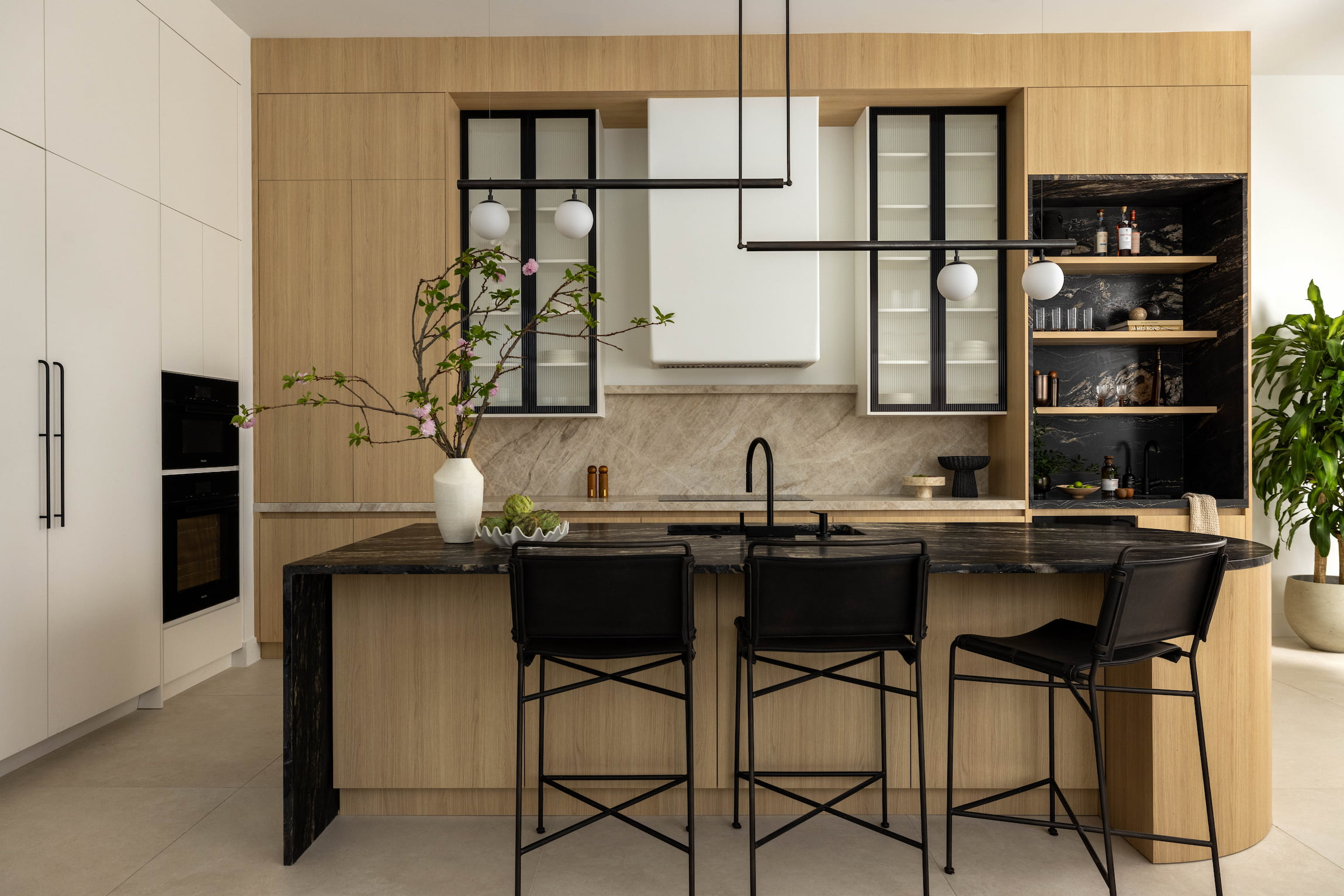
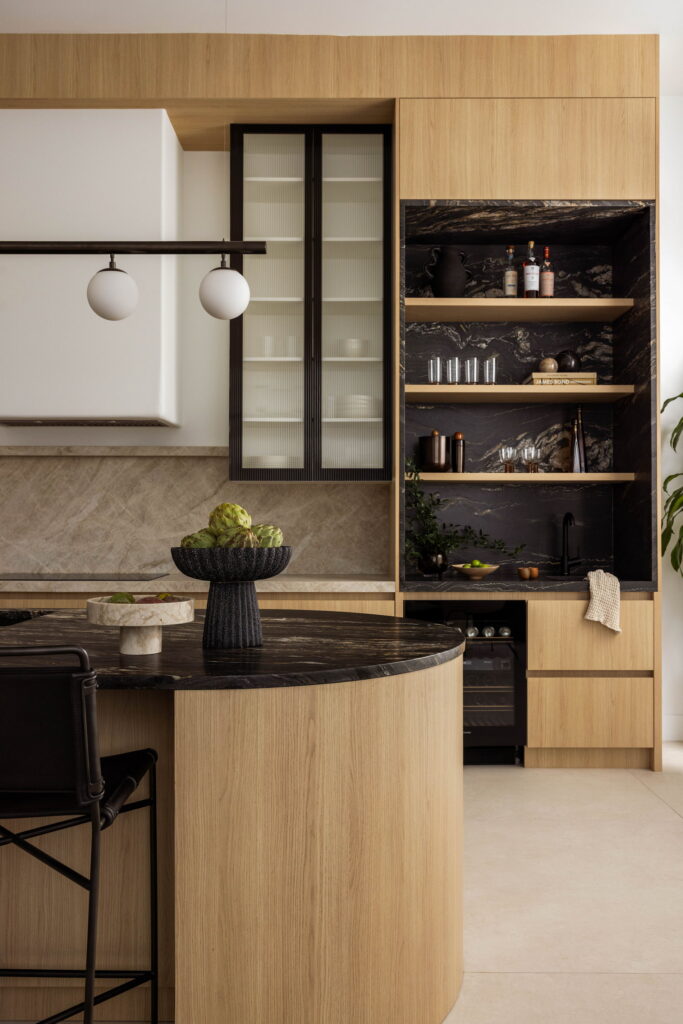
The kitchen took more working out. It is open to the main living spaces, so it could not feel heavy, and the direction came in two parts. “The husband wanted all white, and the wife wanted all wood!” Radoni says.
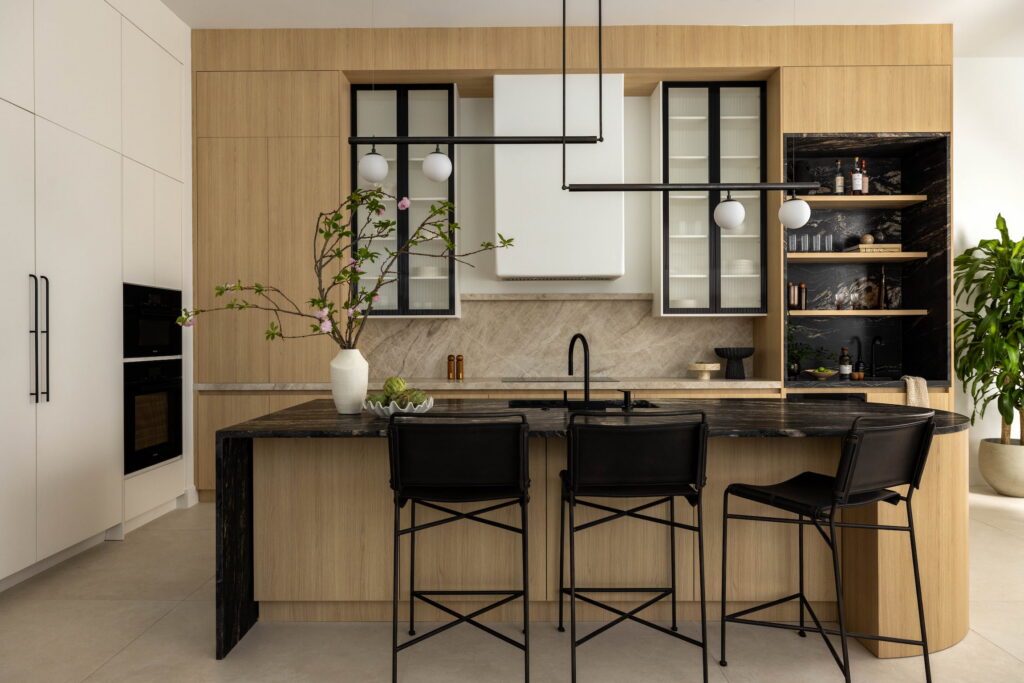
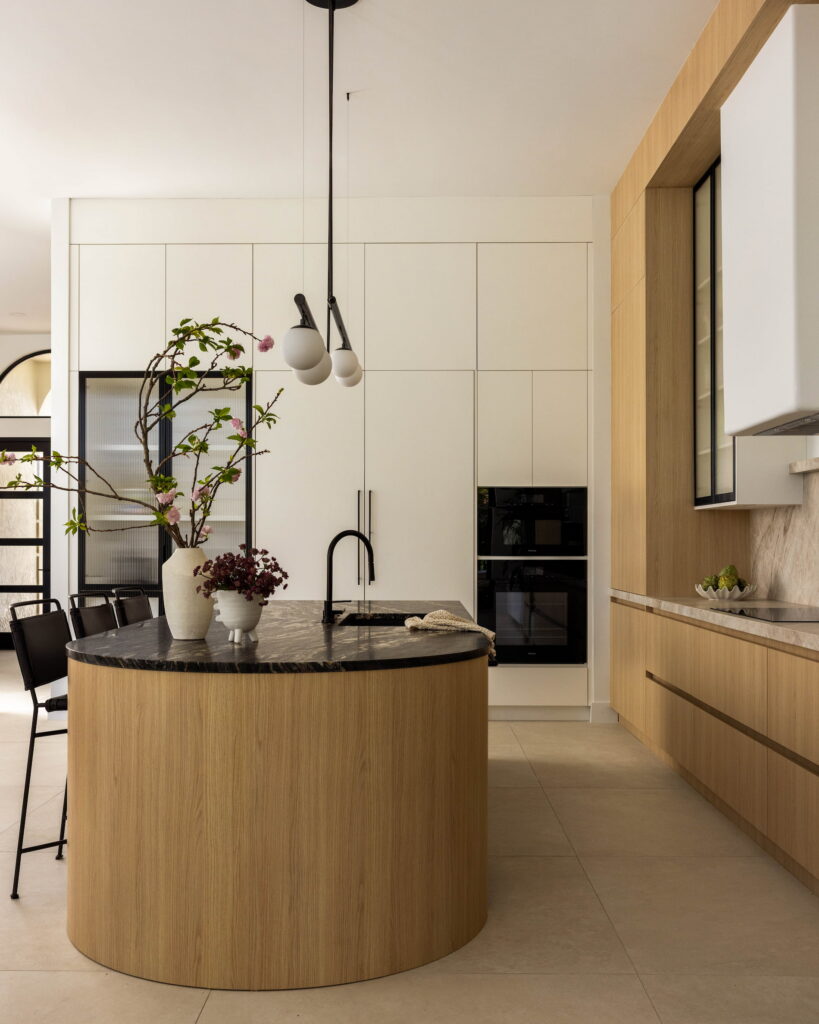
After a few revisions the room became both, and it reads as one room rather than two opinions. The main kitchen wall carries the wood, and the shorter appliance side is white. A dark, veined stone at the island and bar gives all that pale wood something to push against. Mixing materials kept the room light enough for an open plan while giving it plenty of interest. The bar is part of the same kitchen millwork, and it still gets a moment of its own.
What the Curves Are Doing
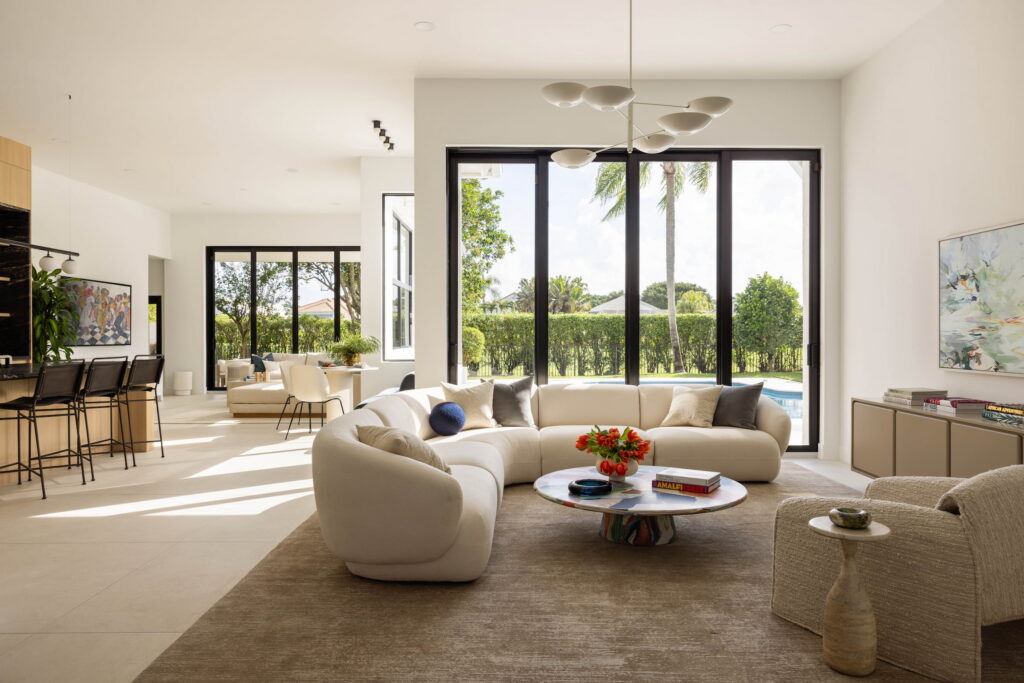
The clients are golfers, and the views beyond the sliding doors mattered to them. “We wanted the interiors to complement the landscape rather than compete with it,” Radoni says, “so the softer forms and natural palette felt like a natural extension of what was happening outside.”
Those softer forms do a second job. “I love curves!” Radoni says. She finds curved furniture inviting, but her case for them is as much about movement as line. “It also creates a natural flow through a space, so you never feel like you’re walking around or navigating the furniture,” she says. In the living room, the seating bends around the Kooij table, and the room draws people in instead of routing them around it.
Furniture is ground she knows well. Before founding her studio, Radoni was an interior designer and showroom manager for a boutique furniture manufacturer in New York City. There she worked on pieces from the first idea and preliminary design through manufacturing, logistics, and installation.
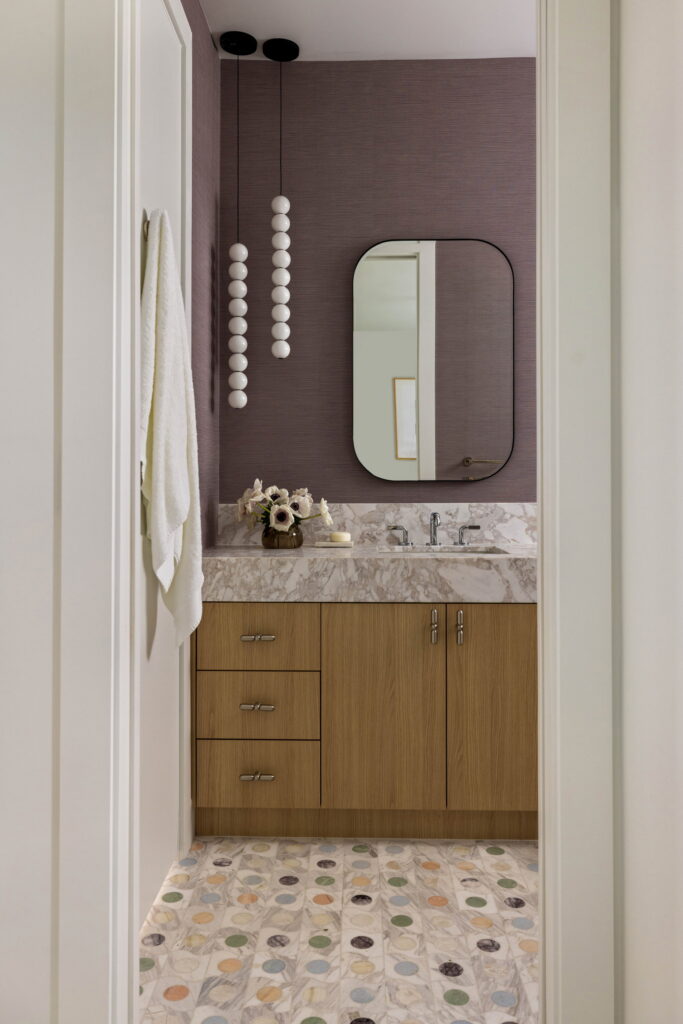
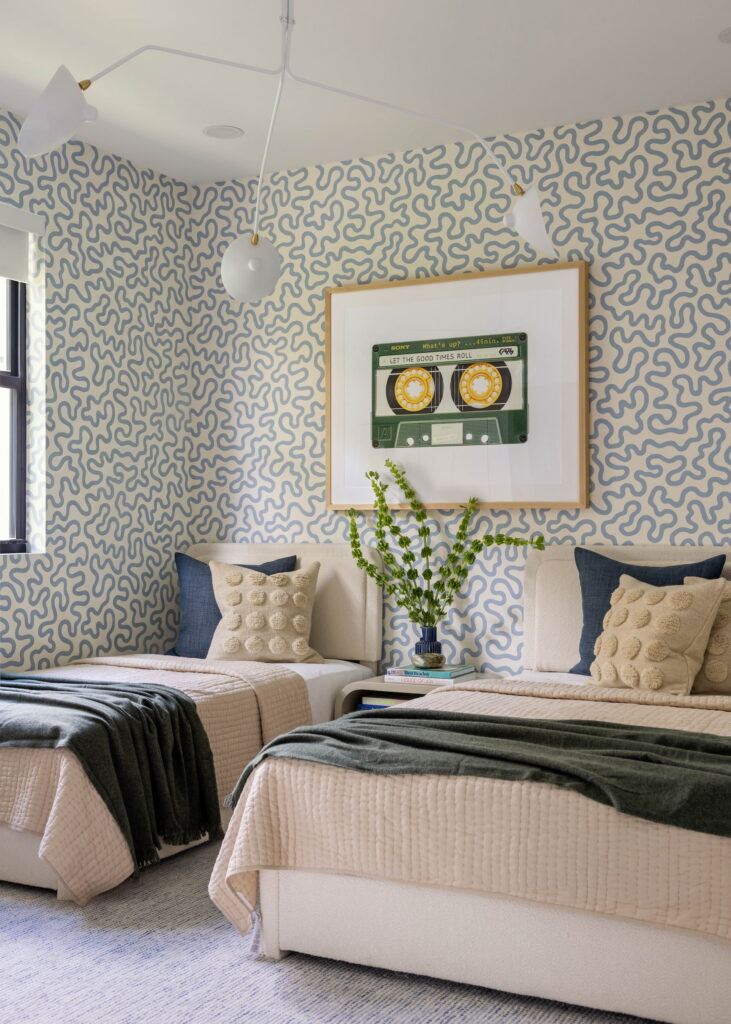
Away from the main rooms, pattern gets more of a say. One bedroom is wrapped in loose blue loops and reads as pure play. A bath dressed in lavender and colored stone carries as much personality as any room in the house. In both, the furnishings step back far enough to let the pattern carry the space.
The rooms differ from one another on purpose. “Each room had its own special piece or moment, but none of them competed with each other,” she says. “Even though the spaces have different personalities, those pieces complement one another and share a common thread. That allowed the home to feel cohesive without feeling repetitive. Each room has its own identity, but they all still belong together.”
Letting the Clients Lead
“I love having my clients feel like they’re part of the process rather than me simply telling them what to do in their home,” Radoni says. Their opinions and their reactions to certain colors, textures, and individual pieces matter to her. With the clients’ art already in hand, the collaboration on this house began early. From there she looked for the pieces they fell in love with and let those choices help drive the rest of the design.
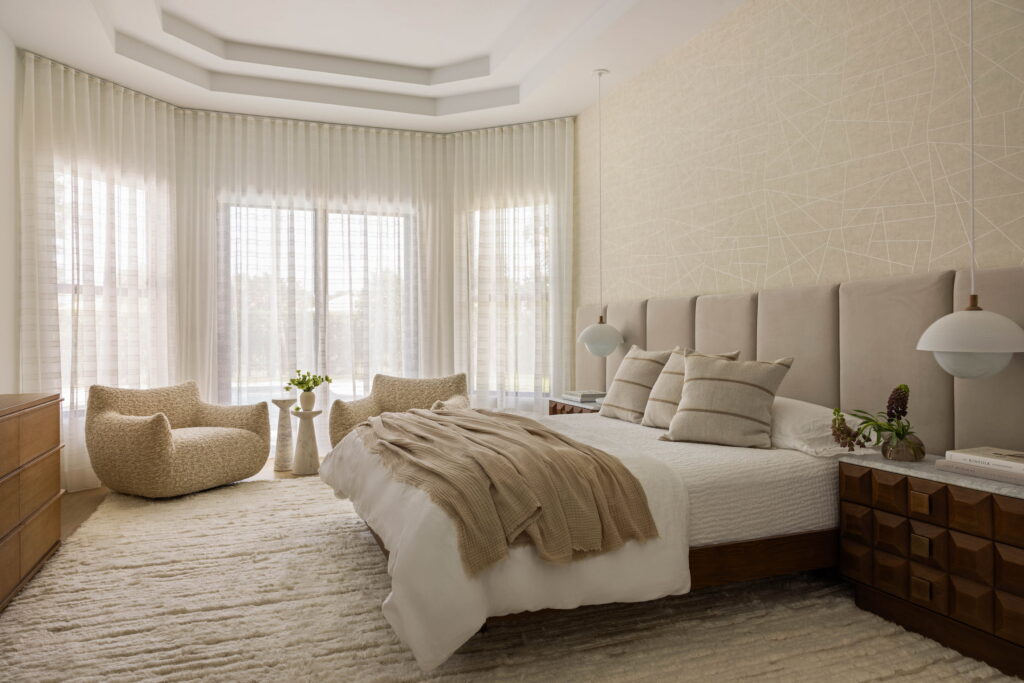
Her advice to anyone about to begin a project like this one starts with an honest picture of the work. “This process should be fun and exciting, but it’s also a lot of decisions to make in a relatively short period of time, and that can feel overwhelming when you can’t yet see the end result,” she says. That is why she believes trust and personality matter so much in choosing a designer. Client and designer spend a lot of time together, and designing a home is personal. “You want someone whose vision you trust, but also someone you genuinely click with and enjoy being around.”
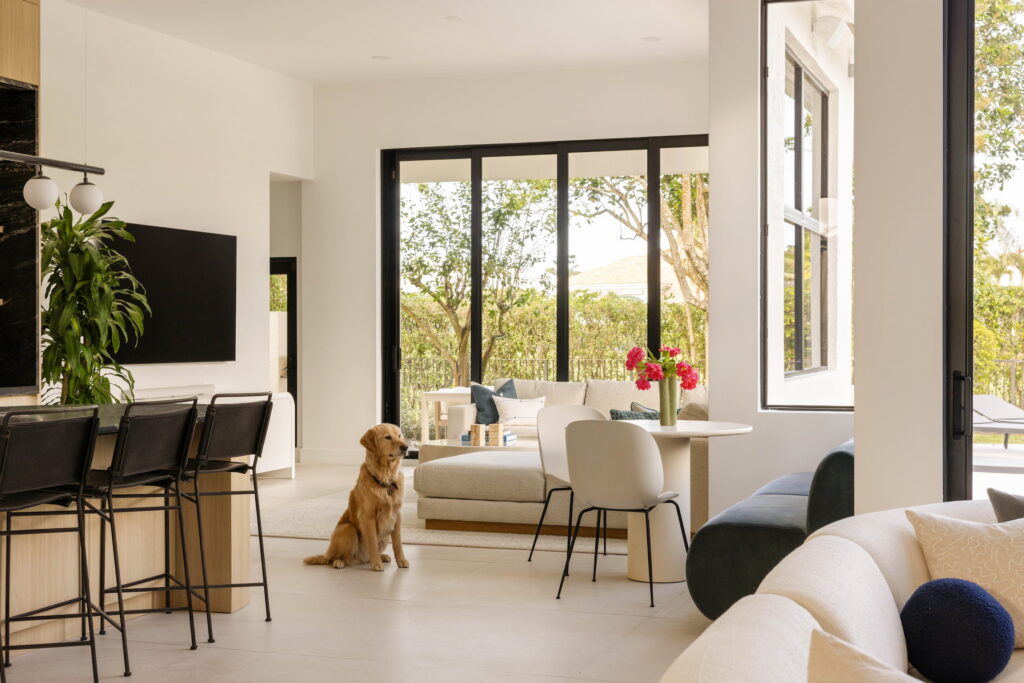
For Radoni, the balance in any room comes down to how the eye travels. “Your eye should be able to move through the room and pick up those pops of color and pattern along the way, rather than feeling overwhelmed by them,” she says.