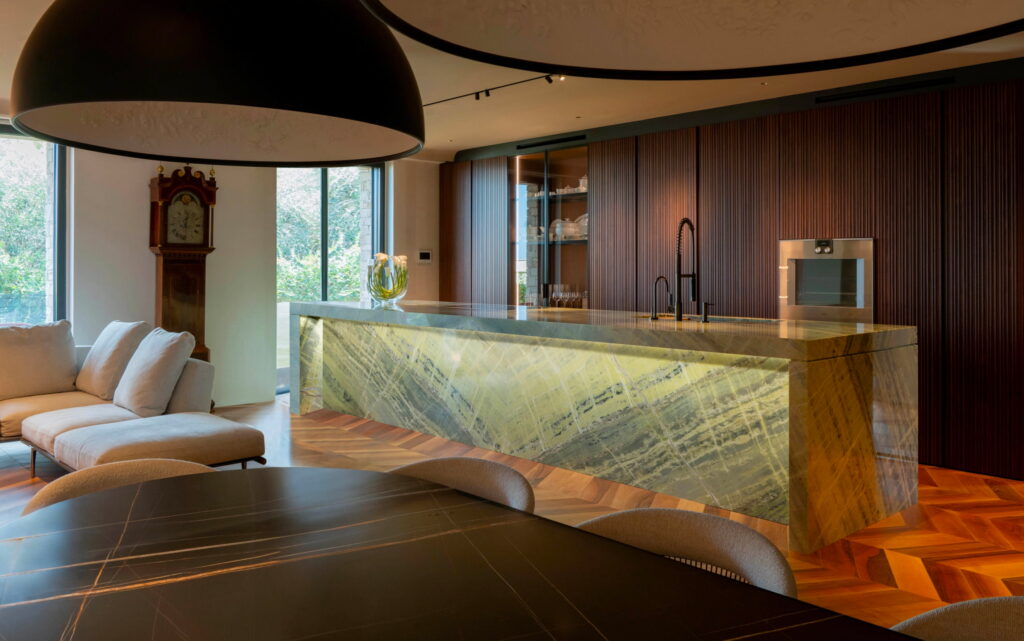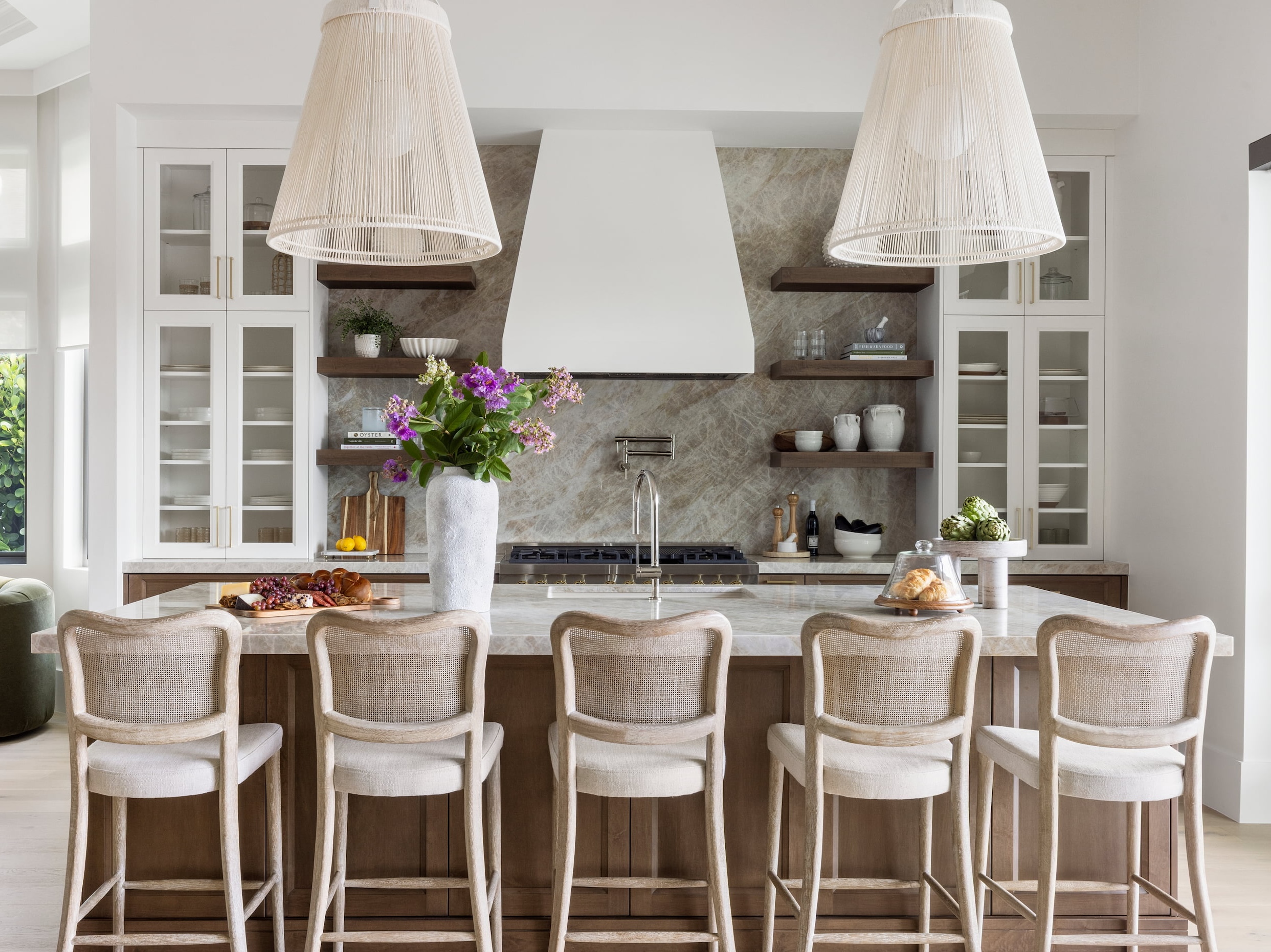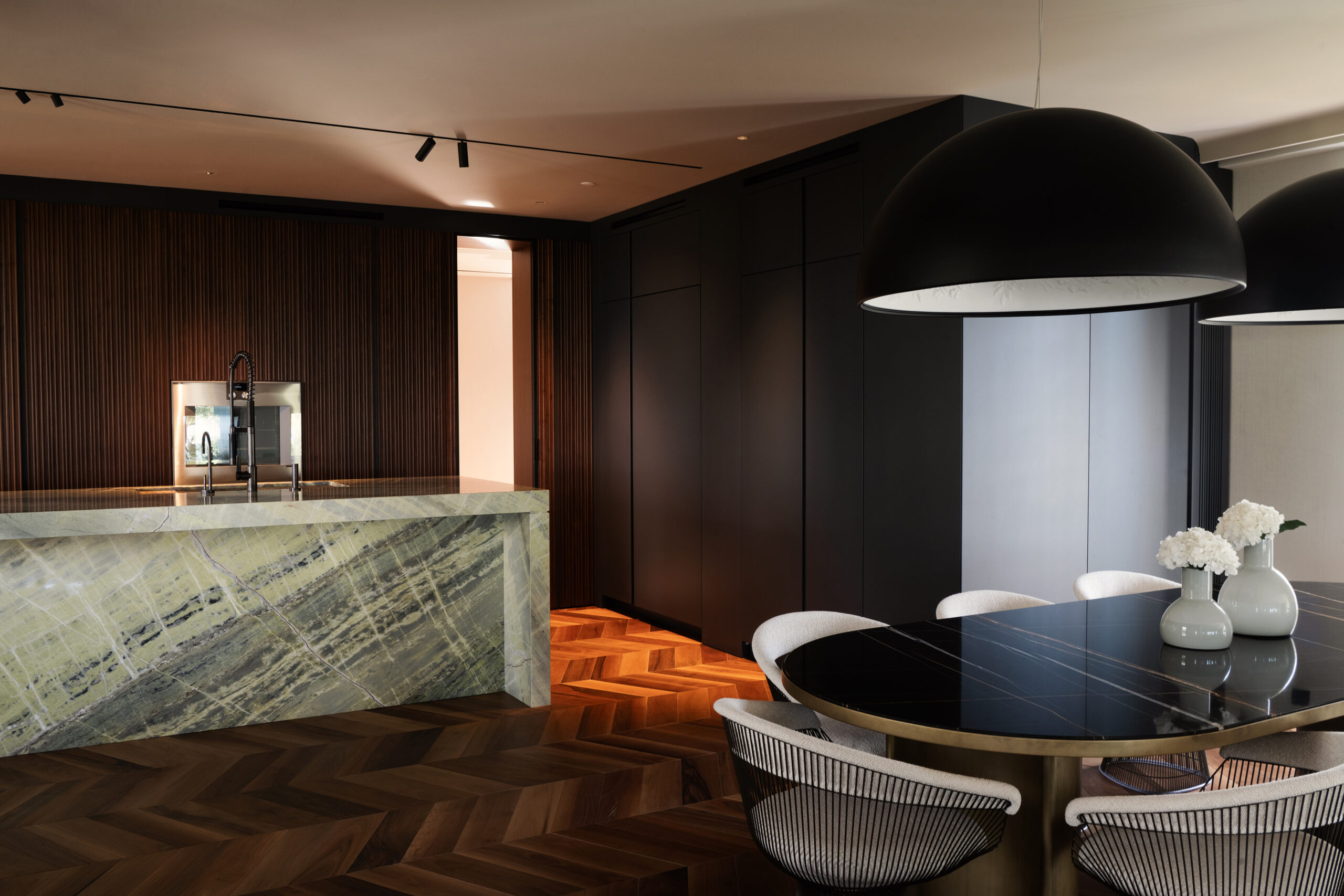
The finishes in a serious South Florida residence are no longer bought. They are commissioned. Book-matched stone for the island, reeded paneling for the walls, metalwork shaped to the hood, a lighting plan drawn to the millimeter, every piece specified months before it reaches the site. And nearly all of it is made by hands the designer will never see, in shops the architect will never visit, then handed down a long line of agents and vendors before it arrives. By the time it does, the people who drew the room and the people who built it have never stood in it together.
Prickly Pear Design exists to close that distance. For the architect or interior designer running such a program, the firm is less a supplier than a collaborator that happens to own a factory. Founded by Italian creative director Carmine Cucinella, it runs a manufacturing operation in Italy alongside a showroom and offices in West Palm Beach, working as an Italian contract supplier to the South Florida trade. “A supplier used to make what someone else drew and stop there,” Cucinella says. “We want to be in the project from the idea, not only at the end of it.” Prickly Pear does not design the home, nor does it sell furniture from an existing collection. Its team works in custom fabrication, taking the brief from conception through to installation, as one continuous program rather than a stack of trade orders.

Everything Made by the Same Hands
That difference is not rhetorical. Most of the market distributes, resells, or assembles work made elsewhere, which is why a finished residence usually arrives in pieces, each ordered from a different vendor and reconciled on site. Prickly Pear keeps the whole chain inside its own walls. Its own woodworking shop, its own finishing department, its own stone and marble works, its own crews to set the result. A drawing is prototyped and milled in Italy and lands on the job site as the object the design team approved, nothing lost in translation between trades, because there is only one.
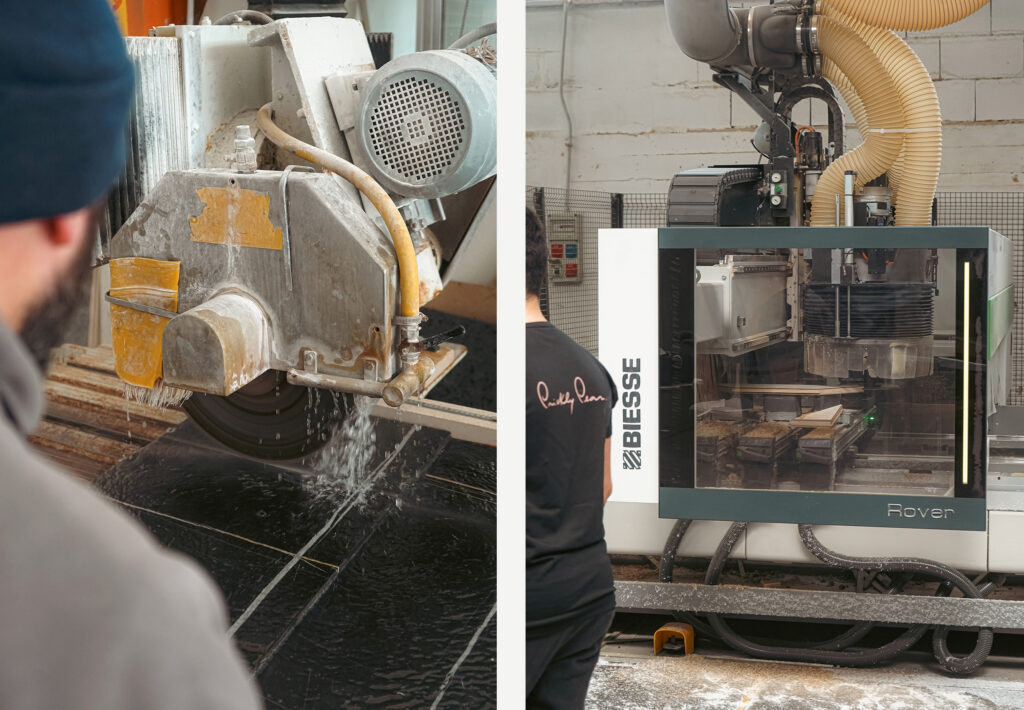
In a house of this ambition, furniture is not a set of objects placed in finished rooms. It is the room. Prickly Pear takes the whole interior as one commission, the kitchens and dressing rooms, the millwork and doors, the stone and metalwork, the lighting, all of it drawn, made, and finished under one roof. The payoff is the kind a designer reads at a glance. A marble seam that carries into the cabinetry beside it without a break. A reeded panel whose channels hold an even shadow across a full wall. Coherence of that order is almost impossible to assemble from separate vendors in separate countries. It has to come out of one shop.
No Importer in the Middle
The West Palm Beach showroom is a working space for the trade, not a retail floor. A designer arrives with drawings rather than a shopping list, the conversation opens in technical language, and that language carries intact to the bench where the work is cut. For a professional told for a decade that Italian fabrication was a phone call to any number of importers, the difference here is directness. The shop, the showroom, and the install crew are the same firm.
The contract model behind this is old in Europe, where an architect or developer hands an entire residence to one firm to conceive, fabricate, and install as one coherent program. It is older than the market it now serves. What is new is its arrival in South Florida, on terms a working designer or builder can engage directly, without an importer in the middle.

Where the Word Italian Stops Being a Label
Italian craftsmanship is a phrase the luxury market has worn down to nothing. What it should point to is specific. Material knowledge built over generations. A shop that moves between hand tools and machine without ceremony. A culture of finish in which a surface carries the name of whoever made it. “Italian design is not a style you import,” says Cucinella. “It is knowing the material, the freedom to work by hand or by machine, and a way of seeing.” It is a method, he insists, not a mood. He moves between the two countries himself, carrying briefs from the Italian floor to the Florida showroom and back, fully staffed on each side so the design team meets one point of contact and never has to manage the chain beneath it.

“We do not replicate, we create,” Cucinella says. “We do not adapt, we interpret.” It is a quiet argument to be making against an industry built on sourcing. A room should read as one object, not an assembly of separately ordered parts, and the only reliable way there is to have one firm cut both sides of every seam. He is betting that South Florida keeps moving his way, toward one house carrying a project from the first drawing to the last reveal. The room is finished, and for once the people who made it are the ones who get to stand in it.