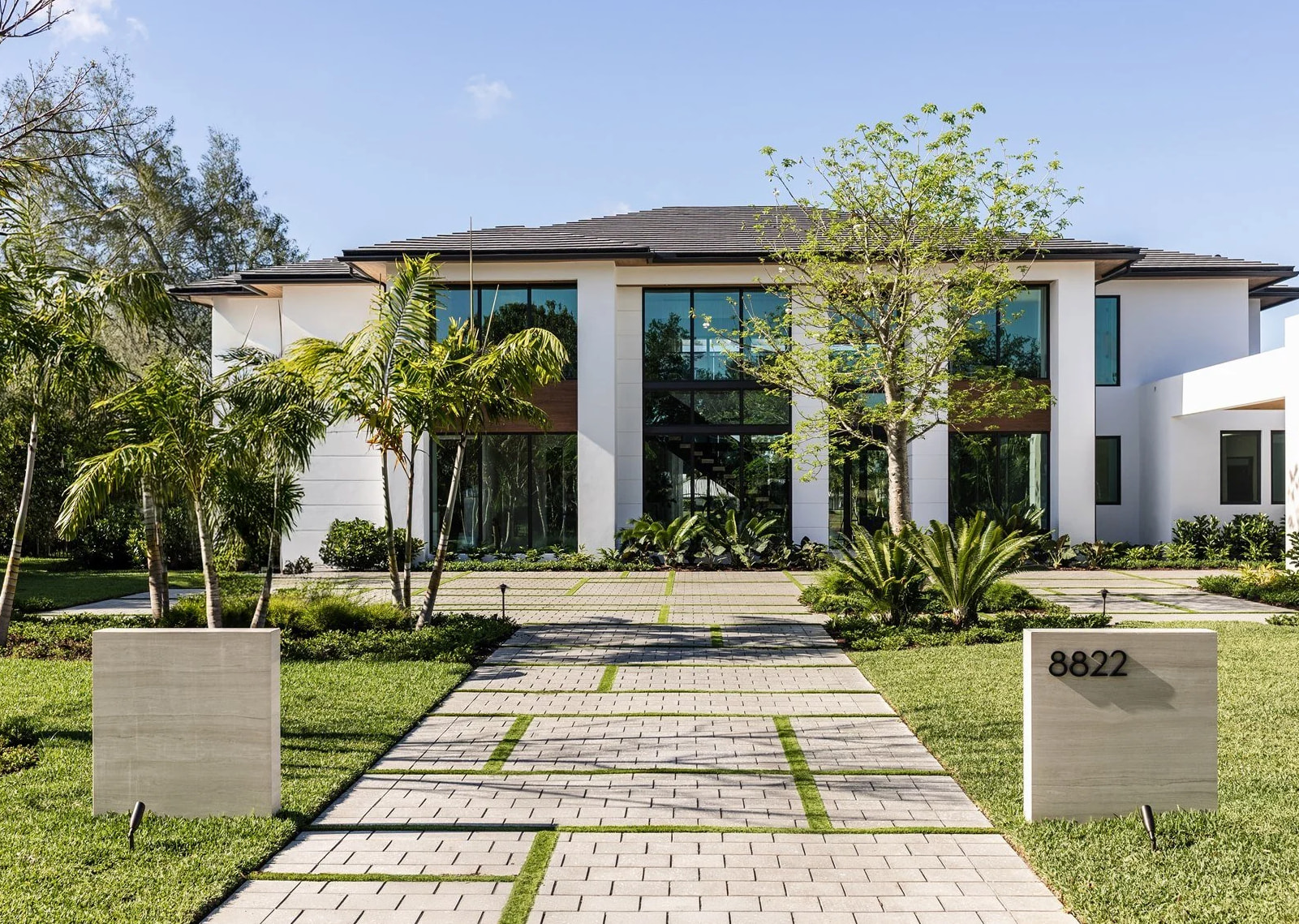
When Tony Panebianco first walked a lakefront lot in Wellington, what stopped him was not the size of the opportunity. It was the quality of the light off the water and the long, unbroken view it offered to anyone willing to build around it. Wellington is not a place that announces architectural ambition. Its design vernacular tends toward the conventional, which is precisely what makes a site like this one worth paying attention to.
For Panebianco, President of PB Built, that instinct to read a site before imposing on it is the foundation of everything. The Jupiter-based custom builder has spent over four decades working across Palm Beach and Martin counties, and the practice he runs is built around a simple conviction. The builder who is present every day is the one who protects the work.

“The lake view became an organizing principle for sightlines, glazing, room placement, and the overall indoor-outdoor experience,” he says. “That is where a project like this really starts: not with square footage, but with what the property wants to become.”
The residence PB Built delivered is one where the view is never incidental. It is the thing the house is organized around. You feel it at the kitchen island, at the great room sofa, and in the primary suite at first light.
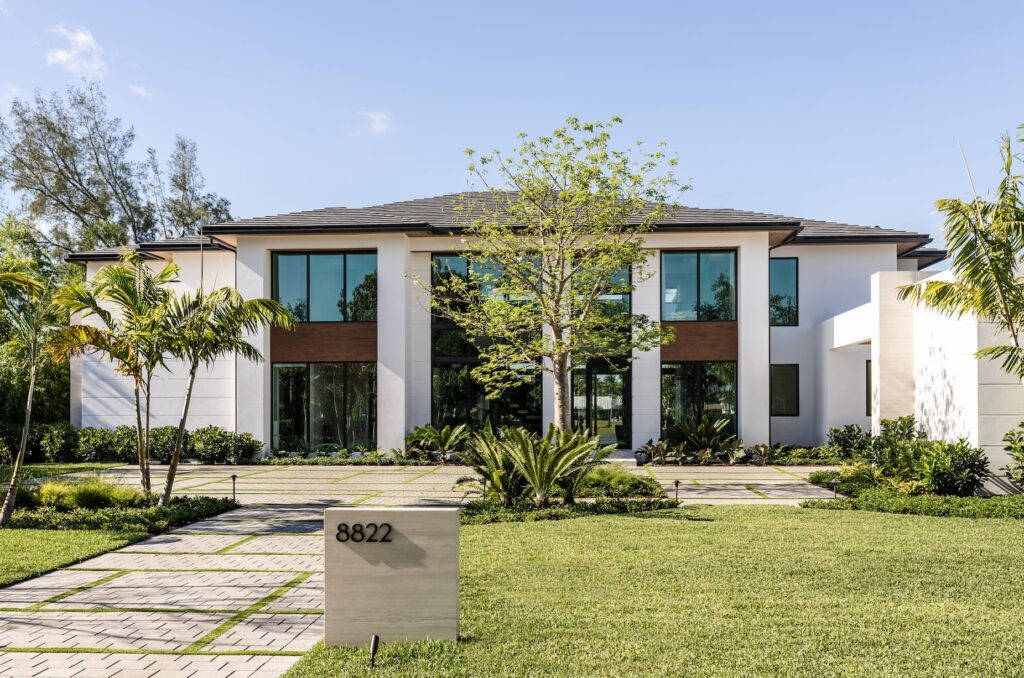
That outcome depended on two firms working in concert with the builder. Smith Kellogg Architecture set the bones of the house, shaping the volumes and the glazing around the sightlines to the lake. The plan turns the main living spaces toward the water, so the lake is rarely out of sight. The Decorators Unlimited carried that intent inward. The firm’s hand shows in how the material palette holds together from room to room, and in furnishings that support the architecture rather than compete with it, so the eye keeps returning to the view.
A Wall That Sets the Tone
The great room makes its intentions clear from the moment you enter. A full-height stone wall rises through the double-volume space, anchoring a fireplace at its center and commanding the room’s entire palette. It is the kind of gesture that earns its scale or exposes every compromise around it, and here it earns every inch.
“Scale changes everything,” says Panebianco. “The larger the element, the less forgiving it becomes. Small variances that might go unnoticed elsewhere become obvious when stone runs through a soaring volume.” Executing it required structural preparation, disciplined layout, and a sequencing plan that kept every adjacent finish in alignment with a design always intended to be read as one thing. A chandelier and a seating grouping complete the room, but the wall is what holds it together.

On the entry side of the volume, a floating stair with open wood treads and black steel rises against a glass wall, framing the landscape beyond and drawing light through the center of the house.
One Composed Environment
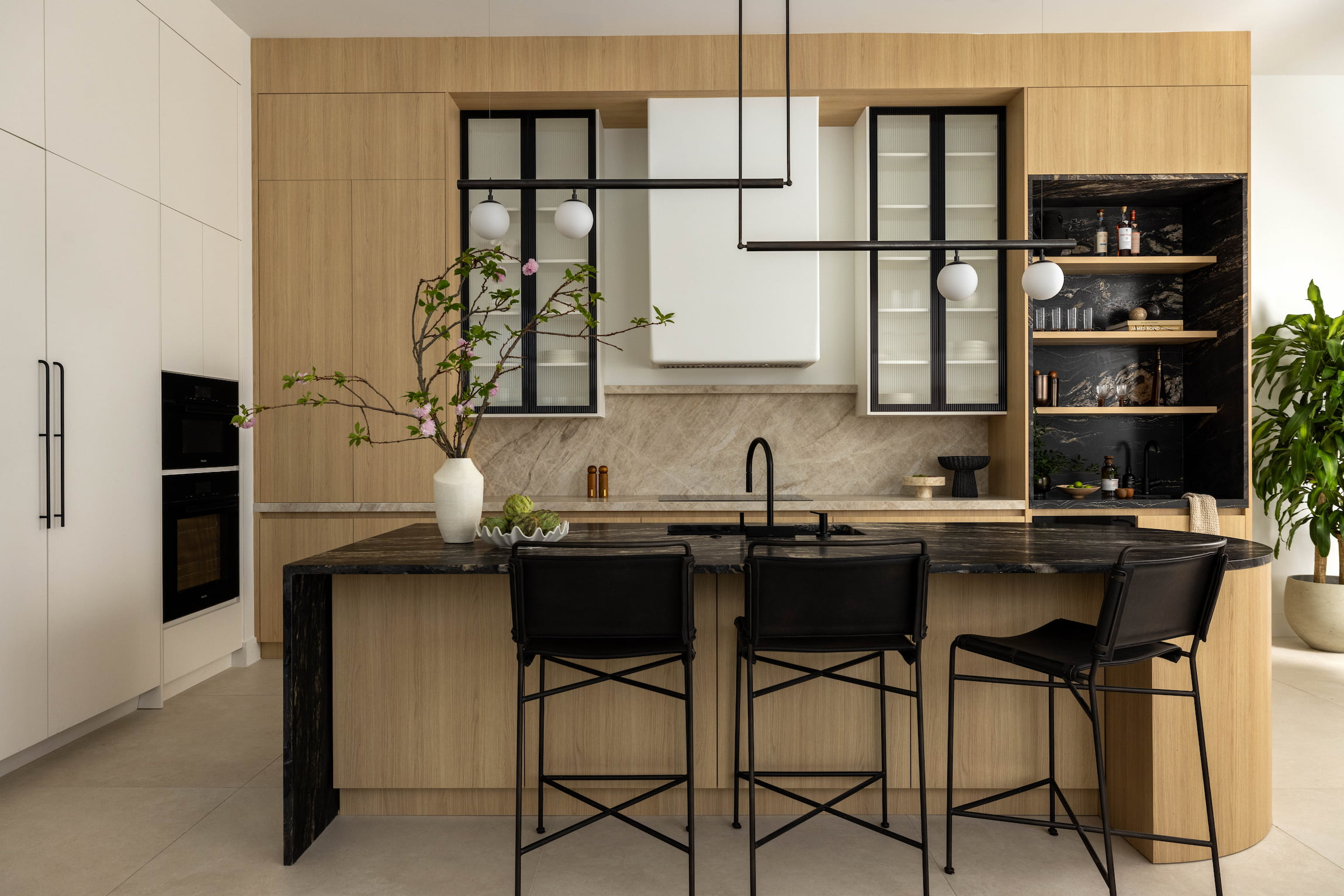
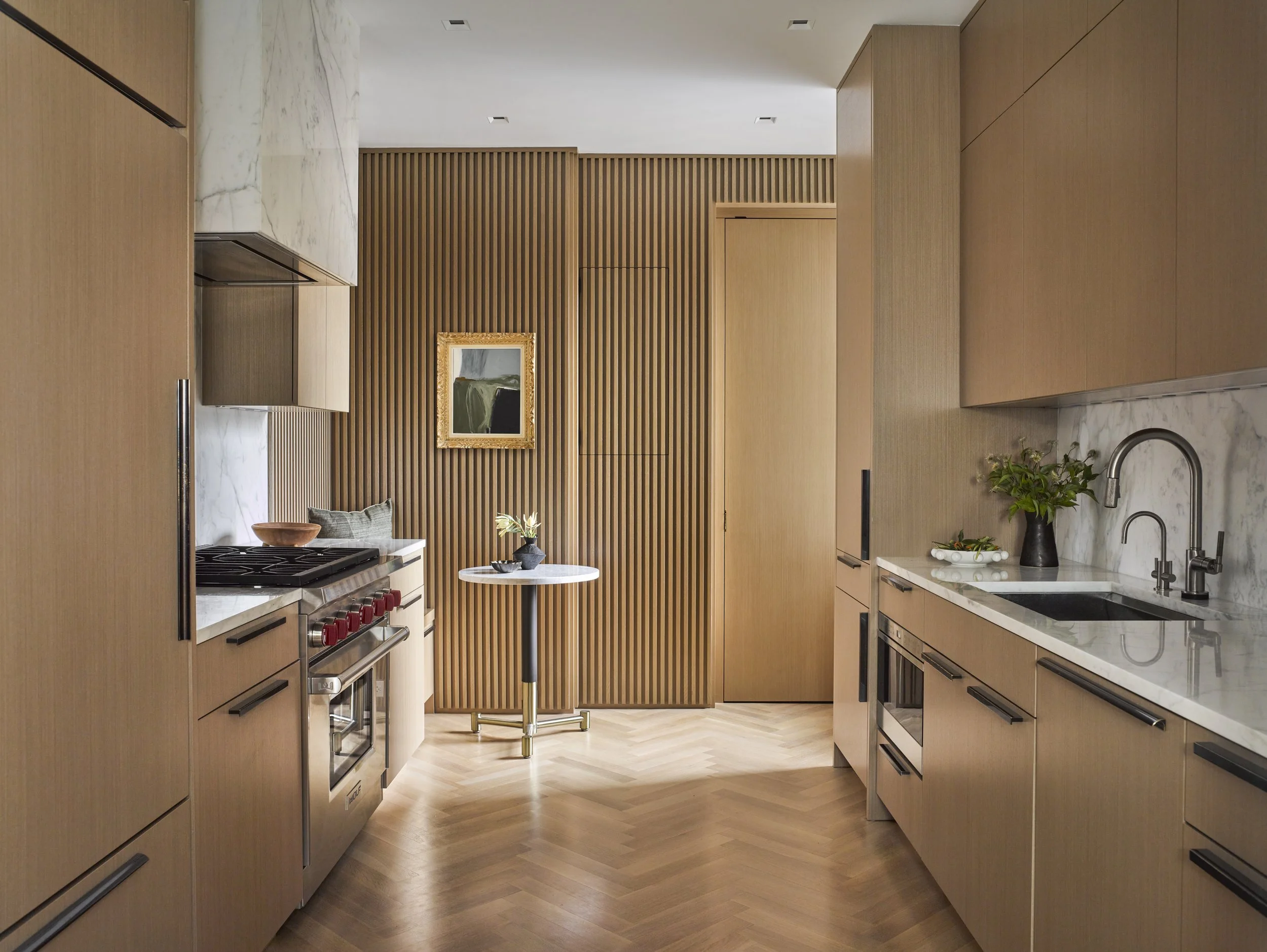
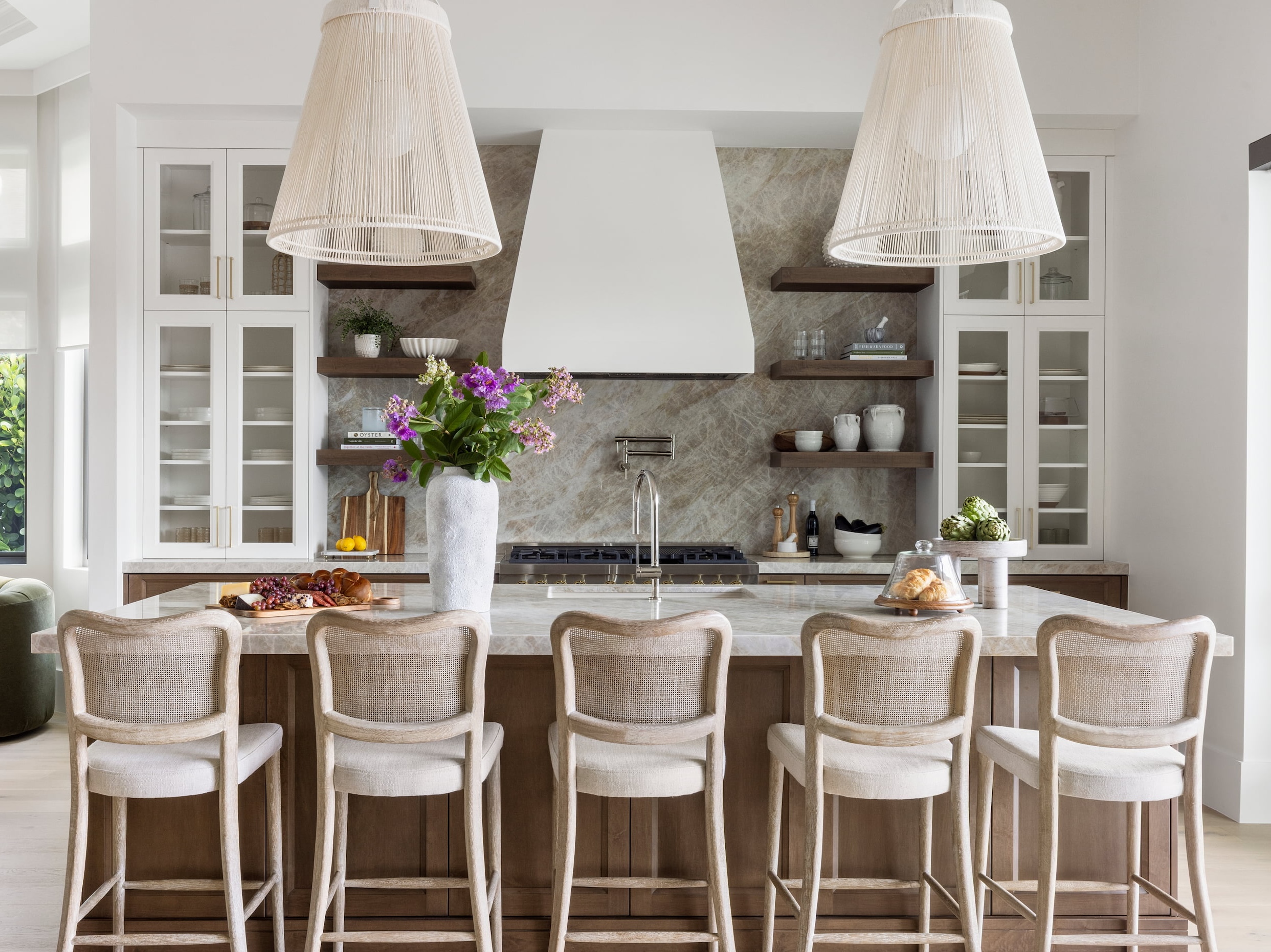
The kitchen reads as a room that has been edited rather than simply specified. The cabinetry and stone work in the same register, and the dining table nearby introduces just enough warmth to keep the palette from feeling cool. None of it competes.
“A kitchen like this is built through restraint and coordination, not excess,” says Panebianco. “The confidence you feel in the space comes from how well the elements relate to each other.” What that looks like in practice is a builder in the room long before anything is ready to install, reviewing drawings, holding tolerances, and making the hundred small decisions that never appear in the finished photography but determine whether the design survives contact with construction.

The residence is a large home, and scale without discipline produces houses that feel like collections of expensive rooms rather than one coherent place. “Does this room support the whole, or distract from it?” is the question he describes returning to at every stage, whether he is standing in the glass-enclosed study, the golf simulator, the bar, or the large-screen viewing room. Each space has its own character. None announces itself at the expense of the one before it.
The Discipline Behind the Calm
The primary suite is where that philosophy becomes most personal. A room meant to feel like a retreat demands a different kind of attention than the social spaces below, slower, more deliberate, with nowhere to hide. Sliding glass opens directly toward the water, and the view does the work that decoration might otherwise be tempted to do.

The primary bathroom carries that thinking to its logical conclusion. A freestanding oval tub sits centered before a wall of glass framing the garden, so that the act of bathing feels removed from the house entirely. A swirling green and gray stone anchors the shower enclosure, and every line and transition is controlled to the point where the room’s calm feels inevitable rather than designed. “Luxury is not just the material selection,” says Panebianco. “It is the precision. The reason a space feels serene is usually because a great deal of discipline went into making it feel that way.”
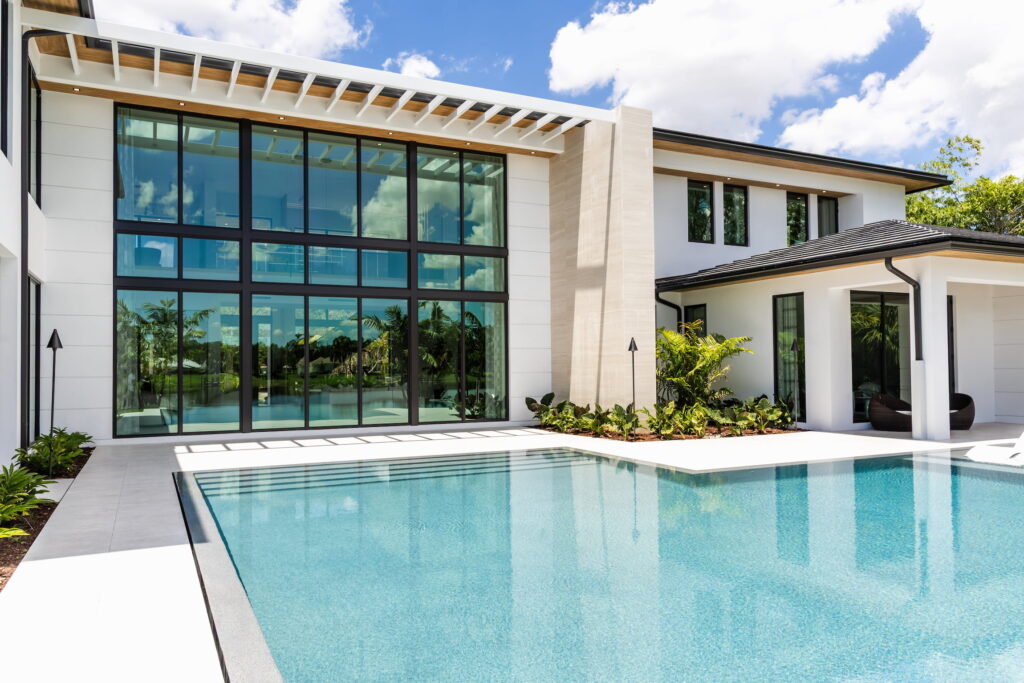
Outside, the pool carries that same quality of stillness toward the lake, and a covered loggia with a wood-plank ceiling, an outdoor kitchen, and generous seating extends the life of the house into the open air. The transition between inside and out is handled so cleanly that the glass wall reads less as a boundary than as the moment the room gives way to the lake.
The lake was always there. The house just had to be worthy of it.